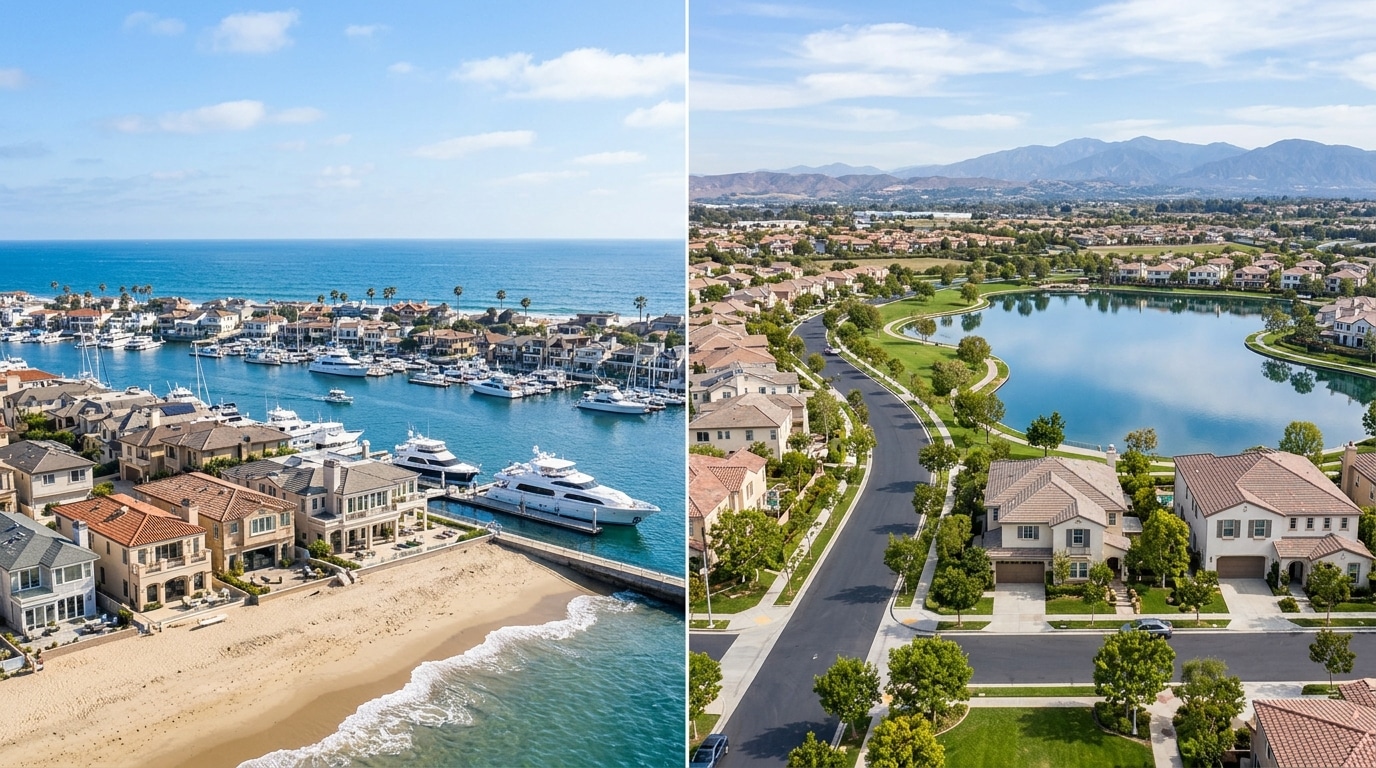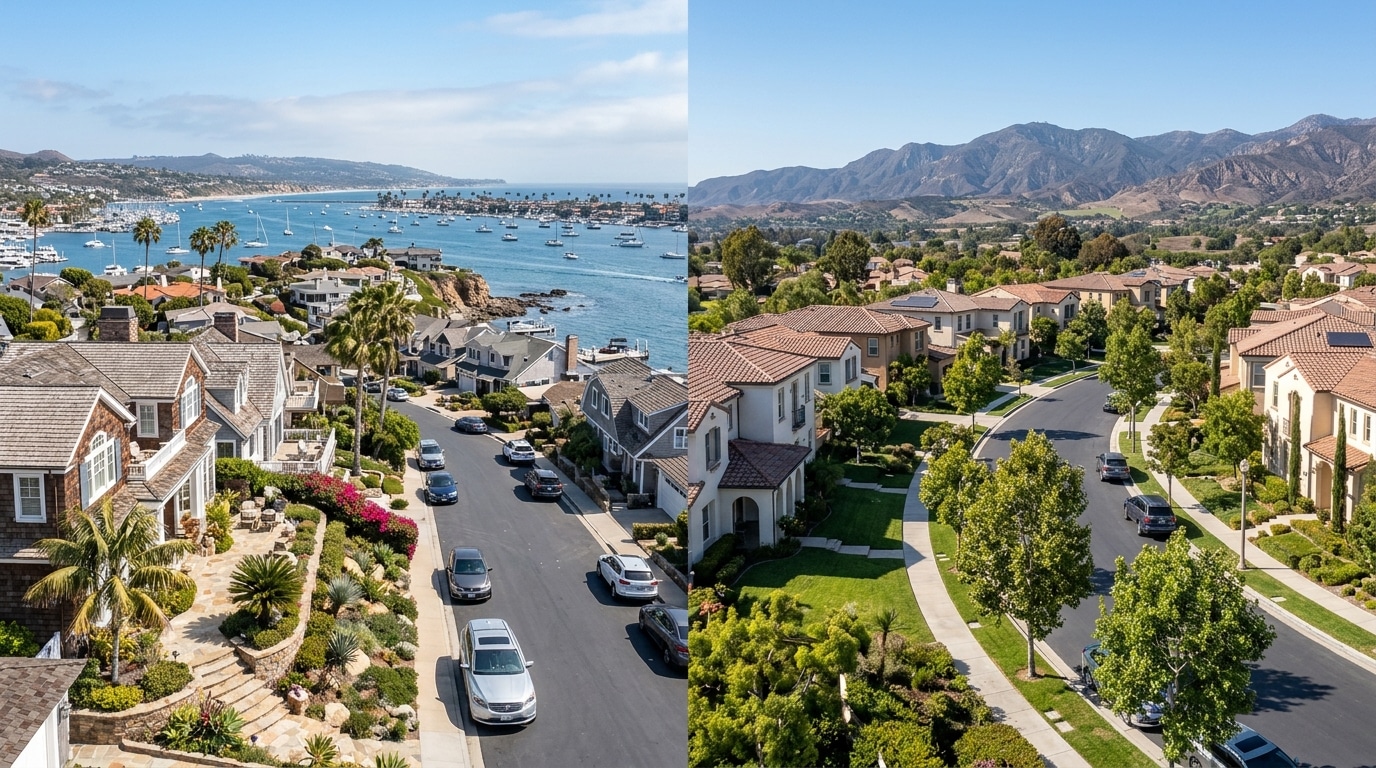
Woodbridge is one of Irvine, California’s recognizable planned communities, with two prominent lake areas that can attract buyers looking for a residential setting connected to outdoor recreation and shared community spaces. For people considering a move to Woodbridge, comparing North Lake and South Lake can be an important part of deciding which area best fits their priorities.
At first glance, the decision may seem to come down to which lake looks more appealing. But choosing a home near either lake involves more than scenery. Buyers should also consider the property’s location, floor plan, lot configuration, privacy, access to community facilities, and how the surrounding environment fits their everyday routines.
It is also important to distinguish between living near a lake and having direct access to it. A home’s proximity to the water does not automatically mean the property has a private waterfront position or unrestricted use of every community facility. Access and privileges should be confirmed through the property’s disclosures and the applicable association documents.
For buyers comparing Woodbridge North Lake vs. South Lake in Irvine, the most useful approach is to evaluate the actual home and its relationship to the surrounding community—not simply choose a side based on the lake’s name.
North Lake vs. South Lake: Understanding the Waterfront Setting
North Lake and South Lake are two distinct waterfront settings within Woodbridge. Both may appeal to buyers who value a residential environment associated with lakeside surroundings, but the experience of living near either one depends on the specific property and its location.
Rather than assuming one lake is universally better, buyers should consider how each setting aligns with their lifestyle.
What to Consider When Comparing the Two Lakes
Start by looking at the relationship between the property and the water. Some homes may be positioned close to a lake, while others may be located farther into the surrounding residential area. The difference can affect the views, walking routes, outdoor atmosphere, and level of activity a homeowner experiences.
During a property search, consider:
- Waterfront proximity: How close is the home to the lake, and what is the actual route between the property and the waterfront?
- Views and orientation: Does the home have a lake-facing outlook, a partial view, or no direct view?
- Privacy: How much visibility is there between the property, nearby homes, and public or shared outdoor areas?
- Outdoor activity: What kinds of activity take place around the nearby lake areas, and how might that affect the setting?
- Walking access: Are there convenient routes connecting the home to the lake and other community spaces?
- Everyday convenience: Does the location make it easier to reach the places and facilities that matter to the household?
These questions help buyers move beyond general neighborhood descriptions and assess the actual living experience offered by an individual property.
Waterfront Location Does Not Always Mean Waterfront Ownership
One important distinction is the difference between a home near the lake and a home with a direct waterfront position.
A property may be within walking distance of a lake without having a private shoreline, private dock, or exclusive waterfront access. Buyers should not assume that a listing description or neighborhood name guarantees a particular type of access.
If a property is advertised as having a lake view or waterfront location, verify the description by reviewing the property’s position, available photographs, disclosures, and relevant community documentation.
Buyers should also confirm whether any waterfront-related features are part of the private property or belong to shared community areas.
Comparing the Atmosphere Around Each Lake
The atmosphere around a lake can influence how a buyer feels about a home. Some people prefer a location that feels closely connected to shared outdoor spaces. Others may place greater importance on privacy, a quieter setting, or separation from areas with regular recreational activity.
Neither preference is inherently better. The right choice depends on the household.
When comparing North Lake and South Lake, visit the areas in person if possible. Pay attention to the surroundings at different times of day, the relationship between residential streets and shared spaces, and the route from potential homes to the lake.
The goal is to understand what daily life could look like rather than relying exclusively on a listing description.
Home Types, Lot Configurations, and Privacy: What Buyers Should Compare
The lake is only one part of the decision. The home itself will have a much greater effect on daily comfort, functionality, and long-term satisfaction.
Woodbridge buyers should compare individual properties based on their housing style, layout, lot configuration, outdoor space, and relationship to neighboring homes.
It would be a mistake to assume that every property near North Lake has the same characteristics or that every home near South Lake offers a particular architectural style. Property features should be assessed individually.
Evaluate the Floor Plan Before Choosing a Location
A home can be in an attractive location and still be a poor fit for a household’s needs.
Consider how the interior space supports everyday activities. For example:
- Does the home have enough bedrooms for the household?
- Is there a practical arrangement of living and dining areas?
- Does the kitchen connect conveniently with the main living spaces?
- Is there enough storage?
- Does the layout provide a suitable work-from-home area if needed?
- Are the bedrooms positioned in a way that supports privacy?
- Does the home offer convenient access to its outdoor areas?
Buyers should also think about future needs. A property that works well today may become less practical if household size, work arrangements, or lifestyle priorities change.
Comparing floor plans can help reveal differences that are not obvious from exterior photographs or neighborhood descriptions.
Understand Lot Configuration and Outdoor Space
Lot configuration can have a significant impact on how a property feels.
Two homes with similar interior square footage may offer very different outdoor experiences. One may have a more usable yard, while another may have a layout that prioritizes indoor space or a different relationship with neighboring properties.
When touring a home, look at:
- The size and shape of the usable outdoor area.
- The location of patios, yards, and outdoor seating areas.
- The amount of separation from neighboring homes.
- The position of windows and outdoor spaces relative to nearby properties.
- The property’s orientation and natural light.
- Any maintenance responsibilities associated with the lot.
For buyers who enjoy spending time outside, the usability of the outdoor area may be just as important as proximity to the lake.
Privacy and Neighboring Properties
Privacy is another consideration when comparing homes in a planned community.
A property close to shared outdoor spaces may offer convenient access to recreational surroundings, but buyers should understand how nearby activity could affect their preferred level of privacy.
Look at the placement of windows, fences, landscaping, patios, and neighboring buildings. Consider whether outdoor areas are exposed to pedestrian routes or shared spaces.
Do not rely on general assumptions about privacy based on the lake area alone. The specific position and design of the property matter.
Match the Home to Your Long-Term Priorities
A buyer who values a lake-oriented setting may be willing to prioritize proximity to the water. Another buyer may prefer a particular floor plan, more practical outdoor space, or a location that better supports everyday routines.
A useful comparison should rank the features that matter most.
For example, a household might prioritize:
- Functional interior layout.
- Privacy and outdoor space.
- Convenient access to community facilities.
- Proximity to the lake.
- Long-term maintenance considerations.
Another household may place waterfront proximity at the top of the list. Neither approach is wrong. The important thing is to identify priorities before becoming attached to a particular listing.
Community Access, Recreation, and Everyday Convenience in Woodbridge
Woodbridge’s lakes and shared recreational environment are part of what makes the community distinctive. However, buyers should look beyond the general appeal of community amenities and understand how a specific property connects to them.
The practical experience of living in Woodbridge can depend on location, association arrangements, facility rules, and the routes available from the home.
Consider How You Would Use the Community
Think about the activities that are genuinely important to your household.
Would you regularly walk near the lake? Are shared recreational facilities a major part of your lifestyle? Do you value nearby outdoor spaces for occasional use, or would you prefer a home where the surrounding area feels more private?
These questions can help buyers determine whether the location offers meaningful everyday benefits.
A community amenity is most valuable when it fits how residents actually live. A facility that sounds attractive in a listing may be less relevant if it is not convenient to reach or does not match the household’s interests.
Verify Access to Shared Facilities
Buyers should not assume that every Woodbridge resident has identical access to every facility under identical conditions.
Community access may depend on association membership, property eligibility, applicable rules, and facility-specific policies. The details should be verified before a buyer makes a decision based on expected access.
Before proceeding with a purchase, ask for the relevant association information and confirm:
- Which association or associations apply to the property.
- What shared facilities are available to eligible residents.
- Whether access requires identification, registration, or other procedures.
- Whether facility rules or operating arrangements apply.
- Whether there are restrictions on guests or certain activities.
- Whether any property-specific conditions affect access.
Current rules should be confirmed through the appropriate association documents and official sources. Do not rely solely on a seller’s recollection or a general description of Woodbridge.
Evaluate Walking Routes and Daily Access
A home’s location can influence how easily residents reach nearby outdoor spaces.
When visiting a potential property, consider the actual walking route rather than estimating convenience from a map or listing photograph. Look at street connections, pedestrian access, crossings, and the route’s overall practicality.
Also consider the destinations you would visit regularly. The lake may be an important feature, but buyers should evaluate the home’s relationship to other everyday needs as well.
For example, think about access to shopping, services, work destinations, and other places that form part of your regular routine. The best location is not necessarily the one closest to the water; it is the one that balances the household’s most important priorities.
Visit at Different Times
A single property tour may not provide a complete picture of the surrounding environment.
If possible, visit the area at different times of day. Observe the general activity level, traffic patterns, parking conditions, and how the nearby shared spaces are being used.
This can help buyers develop a more realistic understanding of the location.
It is also useful to walk the route from the property to the lake rather than viewing the lake as a separate destination. This gives buyers a better sense of how the surrounding streets and shared spaces connect.
How to Choose Between Woodbridge North Lake and South Lake
The decision between North Lake and South Lake should come down to the individual property, the surrounding setting, and the buyer’s priorities.
There is no reliable one-size-fits-all answer. A home in either area could be a strong option depending on its features, location, condition, and fit with the household’s needs.
Build a Property Comparison Checklist
Before making a decision, compare potential homes using consistent criteria.
| Comparison factor | What buyers should evaluate |
|---|---|
| Lake proximity | Actual distance and walking route to the lake |
| Waterfront setting | View, orientation, and relationship to the water |
| Home layout | Bedrooms, living areas, storage, and functionality |
| Lot configuration | Outdoor space, shape, and usability |
| Privacy | Relationship to neighboring homes and shared spaces |
| Community access | Applicable association rules and facility eligibility |
| Daily convenience | Routes to regular destinations and services |
| Maintenance | Property-specific and association-related responsibilities |
| Long-term fit | Whether the home supports future household needs |
This approach makes it easier to compare properties objectively.
Review the Property’s Documents
Before purchasing, review the disclosures and applicable association documents carefully.
These materials can help clarify responsibilities, restrictions, and property-specific conditions. Depending on the home, buyers may need to examine association information, maintenance obligations, architectural requirements, and rules related to shared facilities.
Questions about exterior modifications, landscaping, parking, or use of community amenities should be answered through current documentation.
If a property is subject to more than one association, buyers should identify the responsibilities of each one. Do not assume that information for one part of the community automatically applies to another.
Look Beyond the Listing Photographs
Photographs are useful, but they cannot replace an in-person evaluation.
A listing may highlight a lake view, attractive landscaping, or nearby recreational spaces. Buyers should confirm the actual location and condition of these features.
During a showing, look carefully at the home’s interior condition, outdoor areas, neighboring properties, and access routes. Ask questions about anything that could affect ownership or everyday use.
If the home is being marketed with a special feature, request clarification and supporting information rather than relying on broad marketing language.
Work With an Agent Who Understands Irvine
A local real estate professional can help buyers organize the comparison, identify questions to ask, and evaluate how individual properties fit their goals.
Brad Dhesi of BSD Real Estate Group at Keller Williams can help buyers navigate their Woodbridge home search and assess the factors that matter when comparing North Lake and South Lake locations.
The goal is not simply to find a home near a lake. It is to find a property that fits the buyer’s preferred lifestyle, practical needs, and long-term plans.
Suggested internal links: Irvine Neighborhood Overview; Home Buying Services.
Frequently Asked Questions
1. What is the difference between Woodbridge North Lake and South Lake in Irvine?
North Lake and South Lake are two distinct waterfront settings within the Woodbridge community. Buyers comparing them should evaluate the specific property’s proximity to the water, views, walking routes, privacy, surrounding homes, and access to shared facilities. The best fit depends on the individual property and the buyer’s priorities.
2. Is North Lake or South Lake better for buying a home in Woodbridge?
Neither area is automatically better for every buyer. The right choice depends on the home’s layout, lot configuration, location, privacy, community access, and overall fit with the household’s lifestyle. Buyers should compare individual properties rather than assume one lake area offers a universally superior experience.
3. Do homes near Woodbridge North Lake or South Lake have direct lake access?
Not necessarily. A home may be close to a lake without having private waterfront access or exclusive use of the shoreline. Buyers should verify the property’s actual location and review applicable association documents to understand what access is available.
4. What should buyers consider when choosing a home near a Woodbridge lake?
Buyers should consider lake proximity, views, walking routes, floor plan, lot configuration, outdoor space, privacy, maintenance responsibilities, and access to community facilities. It is also important to review disclosures and association documents for property-specific requirements and restrictions.
5. Are Woodbridge community amenities available to every homeowner?
Access should be verified rather than assumed. Eligibility and use may depend on the property’s association arrangements and the rules governing individual facilities. Buyers should review current association documents and confirm applicable access policies before relying on a particular amenity as part of their purchase decision.
Ready to Find Your Ideal Home Near Woodbridge North Lake or South Lake?
Thinking about buying a home near Woodbridge North Lake or South Lake in Irvine?
Choosing the right property means looking beyond the lake itself. Home layout, outdoor space, privacy, community access, and everyday convenience all deserve careful consideration.
Contact Brad Dhesi of BSD Real Estate Group at Keller Williams for guidance with your Irvine home search. With a property-focused approach, Brad can help you compare available homes, evaluate their features, and make a more informed decision about where to live in Woodbridge.