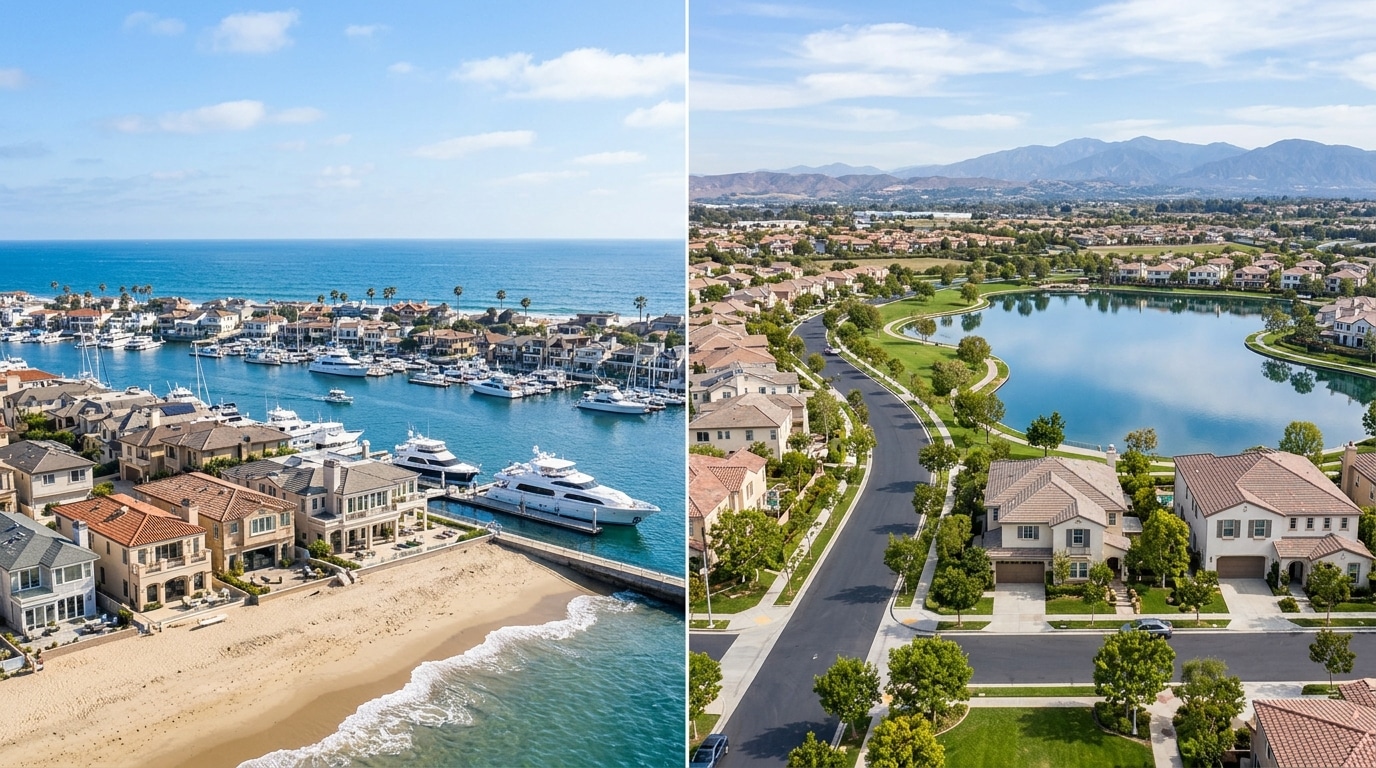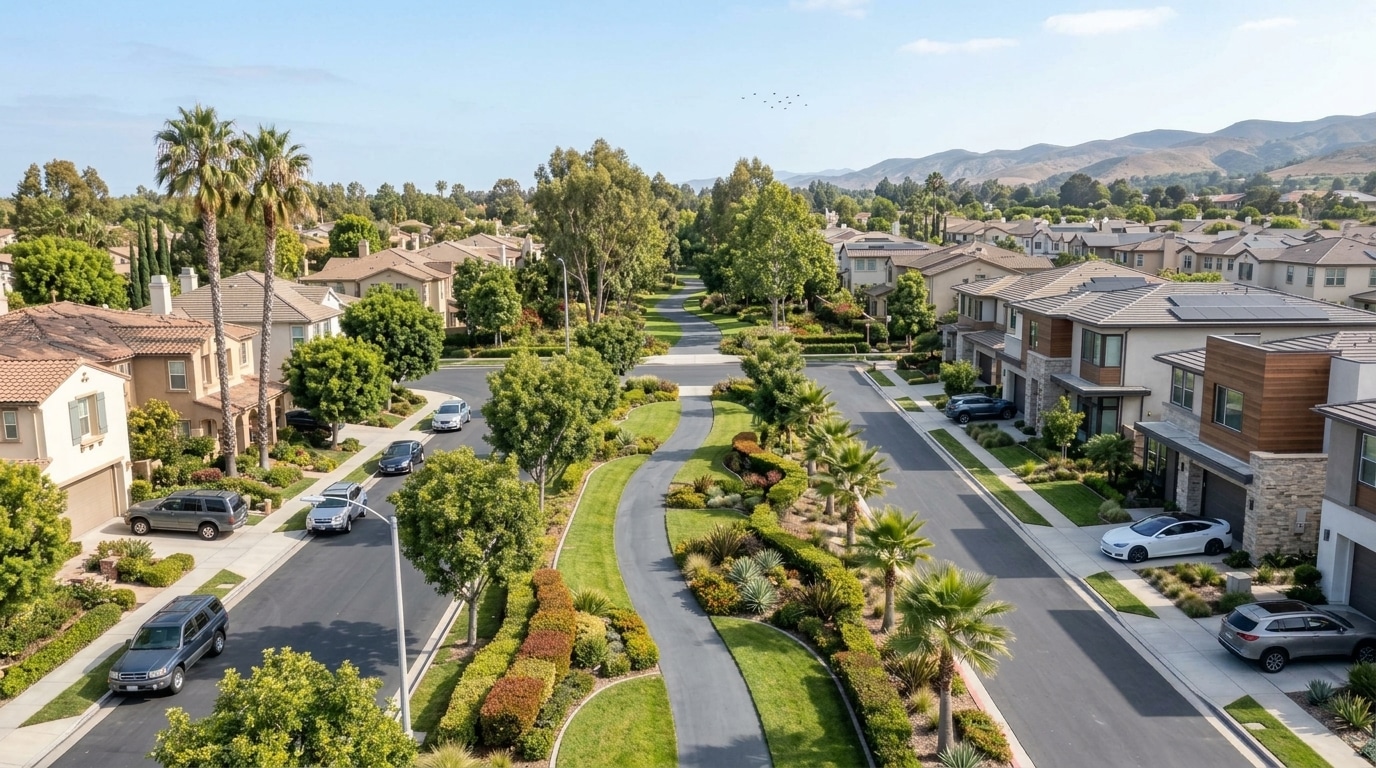
Orange County, California, offers a wide range of residential markets. Buyers considering coastal communities such as Newport Beach may also compare inland cities such as Irvine, Tustin, Lake Forest, and Mission Viejo. Although these areas are part of the same county, their housing options, property characteristics, and market conditions can differ.
Understanding the differences between coastal and inland Orange County can help buyers and sellers make more informed decisions. Inventory, days on market, pricing trends, and buyer competition are useful indicators when evaluating the market.
However, broad regional descriptions do not tell the whole story. Conditions can vary by city, neighborhood, property type, price range, and individual home. A detached home in one neighborhood may attract a different buyer pool than a condominium or townhome elsewhere.
This guide explains how to compare coastal and inland Orange County housing markets in Fall 2026, what market indicators to review, and how buyers and sellers can use current information when planning their next move.
Important reporting note: Fall 2026 is not yet complete as of October 30, 2026. A full September–November fall-market report cannot be finalized until November has ended and the relevant housing data has been published. Current MLS figures should be inserted and dated before this article is published as a completed seasonal market report.
Understanding Coastal and Inland Orange County Housing Markets
Coastal and inland Orange County markets offer different residential settings and property choices. Buyers should understand these differences before comparing listings or interpreting market statistics.
What Is Considered Coastal Orange County?
Coastal Orange County generally refers to communities located along or near the Pacific coastline.
Newport Beach is one example of a coastal city buyers may consider when researching Orange County real estate.
Properties in coastal communities can vary significantly. Buyers may encounter detached houses, attached homes, condominiums, and other residential property types.
It is important not to assume that every coastal property has an ocean view, direct beach access, or the same lifestyle features. The property’s specific location and characteristics matter.
When evaluating a coastal home, consider:
- The property’s exact location.
- The type and condition of the home.
- Whether any advertised views are verified.
- The property’s access and parking arrangements.
- Applicable association requirements.
- Insurance and maintenance considerations.
- Current comparable sales.
These details help buyers compare individual properties rather than relying on the general label of a coastal market.
What Is Considered Inland Orange County?
Inland Orange County includes communities located farther from the coastline, including Irvine, Tustin, Lake Forest, and Mission Viejo.
These cities contain a variety of residential neighborhoods and housing options. Buyers may encounter detached homes, townhomes, condominiums, and planned residential developments.
Each city also contains distinct neighborhoods, so the overall market cannot be described accurately through one citywide statistic alone.
For example, buyers comparing homes in Irvine and Tustin should consider the specific neighborhoods, property types, and price ranges involved.
Important factors include:
- Home size and layout.
- Property condition.
- Lot configuration.
- Neighborhood setting.
- Association rules, where applicable.
- Location relative to regular destinations.
- Recent comparable sales.
A careful property-level comparison can reveal differences that broad inland-market descriptions may overlook.
Why Coastal and Inland Markets Should Be Compared Separately
Housing markets are influenced by the characteristics of the properties being sold and the buyers interested in them.
A coastal condominium and an inland detached house may appeal to different buyers and have different ownership considerations.
Even when two properties have similar asking prices, their location, condition, size, and features may make them difficult to compare directly.
For a useful market analysis, organize the data by:
- City or defined geographic area.
- Property type.
- Price range.
- Reporting period.
- Listing status.
- Relevant property characteristics.
This approach makes it easier to identify meaningful differences without drawing conclusions from unrelated sales.
Why Fall 2026 Market Data Needs a Defined Reporting Period
Seasonal market comparisons require consistent dates.
For a complete Fall 2026 analysis, the reporting period should be clearly identified. If using September through November, the final report should be prepared after November data becomes available.
An October snapshot can still be useful, but it should be labeled as an October report or a partial fall update.
Do not combine different reporting periods without explaining the difference. For example, comparing January-to-date figures in one city with September-to-November figures in another would not provide a reliable comparison.
A clearly defined reporting period helps readers understand what the numbers actually represent.
Comparing Inventory, Days on Market, and Pricing Trends
Inventory and days on market are important indicators when comparing coastal and inland housing conditions. They can help buyers and sellers understand the number of available choices and how quickly properties are going under contract.
For a reliable Fall 2026 comparison, use current, dated MLS data and consistent geographic and property-type definitions.
Days on Market: How Quickly Are Homes Selling?
Days on market measures how long a property remains listed before reaching a defined status, depending on the reporting method used.
When reviewing this metric, confirm whether the source measures days until a pending status, cumulative days on market, or another defined interval.
A comparison should use the same measurement method for both coastal and inland areas.
For example, a useful report could include:
- Median days on market.
- Average days on market, if relevant.
- Results separated by property type.
- Results separated by price range.
- Changes compared with the previous reporting period.
Avoid relying on one average without reviewing the distribution of individual listings. A small number of properties that take much longer to sell can influence an average.
Days on market can help identify differences in selling activity, but it should not be treated as a guarantee of how quickly a particular property will sell.
Pricing Trends and Listing Adjustments
Pricing trends provide another way to compare coastal and inland markets.
Useful measures may include median closed sale price, price per square foot, and the number or proportion of listings that have reduced their asking prices.
However, these metrics need context.
A change in median sale price may reflect a different mix of homes sold rather than a change in the value of comparable properties.
For a more meaningful comparison, review:
- Median closed sale price.
- Sale price compared with original asking price.
- Price reductions.
- Comparable sales for similar properties.
- Results by property type and price range.
Price per square foot can be useful as a reference point, but it should not be used as the only method of valuing a home. Layout, lot size, condition, location, and property features all matter.
What the Numbers May Mean for Buyers and Sellers
Market indicators can help people understand the environment in which they are making a real estate decision.
For buyers, inventory and days on market may help identify where more choices are available or where listings are taking longer to attract offers.
For sellers, the same information can help inform pricing and preparation decisions.
However, a countywide or citywide trend does not determine the outcome for an individual property.
A home that is priced appropriately and presented well may perform differently from another property in the same neighborhood.
Before publication: Add verified September–November 2026 MLS figures once the reporting period is complete. Include the source, date retrieved, geographic boundaries, property types, and measurement definitions. Until then, present the article as a market-comparison guide or clearly labeled partial-season update rather than a completed Fall 2026 statistical report.
Buyer Competition and Negotiating Leverage in Coastal and Inland Markets
Negotiating leverage is influenced by the relationship between available homes and buyer demand. Inventory, days on market, pricing, property condition, and competing offers can all affect negotiations.
Neither coastal nor inland Orange County should automatically be described as a buyer’s market or seller’s market without current supporting evidence.
How Inventory Can Influence Negotiations
When buyers have more comparable properties to consider, they may have greater flexibility when evaluating a purchase.
They can compare condition, location, pricing, and features before deciding which home best meets their needs.
When the number of suitable listings is limited, buyers may face more competition for certain properties.
However, inventory alone does not determine negotiating leverage.
A property with unusual features, a specific location, or limited comparable alternatives may behave differently from the broader market.
Buyers should review the available competition for the particular home they are considering.
How Days on Market Can Affect an Offer Strategy
A property that has been listed for an extended period may warrant closer investigation.
Buyers may want to understand why the home has not sold. Possible considerations include pricing, condition, presentation, property features, or changes in the seller’s circumstances.
Longer time on market does not automatically mean the seller will accept a lower offer.
Likewise, a recently listed home is not necessarily receiving multiple offers.
Before deciding how much to offer, buyers should review comparable sales, current competing listings, and any available information about the property’s history.
Pricing Strategy for Coastal and Inland Sellers
Sellers should understand how their home compares with other properties competing for the same buyers.
A pricing strategy should consider recent comparable sales, active listings, property condition, and the home’s individual features.
For coastal properties, buyers may evaluate factors such as the specific location, property type, views where verified, and ownership considerations.
For inland properties, buyers may focus on neighborhood setting, layout, lot characteristics, condition, and other property-specific features.
The most useful comparison is usually between similar homes rather than a broad coastal-versus-inland average.
Negotiating Beyond the Purchase Price
Negotiations can involve more than the amount offered.
Depending on the transaction, buyers and sellers may discuss:
- Closing timelines.
- Inspection and investigation periods.
- Financing and appraisal contingencies.
- Repair requests.
- Seller concessions, where appropriate.
- Included fixtures or personal property.
- Possession arrangements.
The availability and suitability of these terms depend on the transaction, the parties’ goals, and applicable contract requirements.
Buyers should understand the implications of any contingency they consider waiving or modifying. Sellers should evaluate the complete offer rather than focusing only on the headline purchase price.
Why Local Expertise Matters
Orange County contains many distinct residential markets. A strategy that makes sense for one property may not be suitable for another.
Brad Dhesi of BSD Real Estate Group at Keller Williams can help buyers and sellers evaluate individual properties, review relevant comparable sales, and understand how current local conditions may affect their decisions.
For anyone comparing coastal and inland locations, the goal should be to make decisions using current evidence rather than assumptions about an entire region.
Choosing Between Coastal and Inland Orange County in Fall 2026
The decision between coastal and inland Orange County depends on more than market statistics.
Buyers should consider their property requirements, budget, preferred residential setting, and long-term plans. Sellers should focus on how their individual property compares with current competition.
Build a Consistent Market Comparison
When comparing two areas, use the same criteria for each.
| Comparison factor | What to review |
|---|---|
| Inventory | Active listings for the same reporting period |
| New listings | Number of properties newly listed |
| Pending sales | Number of properties under contract |
| Closed sales | Completed transactions |
| Days on market | Median or average using the same definition |
| Sale prices | Median closed price and comparable sales |
| Price reductions | Number or share of listings with reductions |
| Property types | Detached, attached, and condominium categories |
| Price ranges | Similar buyer price segments |
| Competition | Comparable active and pending properties |
This framework helps buyers and sellers avoid misleading comparisons.
Consider the Property, Not Just the Region
A broad market trend can provide useful context, but the individual home should remain the focus.
Before making a decision, examine the property’s condition, layout, location, ownership costs, and comparable sales.
For buyers, this can help determine whether a home is appropriately priced and whether it meets their needs.
For sellers, it can help identify the property’s competitive position and inform decisions about preparation and pricing.
Evaluate Lifestyle and Ownership Considerations
A coastal location may appeal to buyers interested in living near the coastline, while inland communities may offer different residential settings and property choices.
Neither option is automatically better.
Consider the practical details that matter to your household, such as regular destinations, property maintenance, insurance, parking, association obligations, and the type of home you want to own.
Verify location-specific details rather than assuming that every property in a city or region offers the same benefits.
Work With an Agent Who Understands Orange County
Comparing coastal and inland markets requires more than looking at headline prices.
Buyers and sellers benefit from reviewing relevant local data, understanding the differences between property types, and evaluating individual homes against current competition.
Brad Dhesi of BSD Real Estate Group at Keller Williams can help clients explore real estate opportunities in Irvine and the broader Orange County area.
Whether you are considering Newport Beach, Irvine, Tustin, Lake Forest, Mission Viejo, or another Orange County community, a property-specific strategy can help you make a more informed decision.
Suggested internal links: Orange County Real Estate Services; Irvine Neighborhood Guide; Home Buying Services; Home Selling Services.
Frequently Asked Questions
1. Is coastal or inland Orange County more expensive?
It depends on the specific city, neighborhood, property type, and price range. Buyers should compare similar homes using recent closed sales rather than assuming that every coastal property costs more than every inland property.
2. Are homes selling faster in coastal or inland Orange County in Fall 2026?
That requires current MLS data for a clearly defined Fall 2026 reporting period. Compare median days on market using the same dates, property categories, and measurement method for both areas. A complete September–November comparison should wait until November data is available.
3. Is Fall 2026 a buyer’s market or a seller’s market in Orange County?
There is no single answer that applies to every Orange County community or property type. Inventory, buyer demand, days on market, pricing, and competing listings should be reviewed for the specific area and property category before describing market conditions.
4. What should buyers compare when choosing between coastal and inland Orange County?
Buyers should compare property types, asking prices, recent comparable sales, home condition, ownership costs, location, and available inventory. They should also consider whether each property’s setting and features fit their household’s needs.
5. How can sellers determine the right asking price in Orange County?
Sellers should review recent comparable sales, active competing listings, property condition, and the features of their home. A pricing strategy should reflect the specific neighborhood and property type rather than relying only on countywide or regional averages.
Ready to Compare Orange County Homes or Plan Your Sale?
Whether you are considering a coastal property or exploring inland communities such as Irvine, Tustin, and Lake Forest, understanding the local market can help you make a more confident decision.
Brad Dhesi of BSD Real Estate Group at Keller Williams can help you evaluate available properties, review relevant comparable sales, and develop a strategy based on your real estate goals.
Contact Brad to discuss your next move in Orange County.